
Software › Ink & Iron Workshop
Writing, Publishing and Audiobook Production
Ink & Iron Workshop
An author’s workspace for developing manuscripts and fictional worlds, preparing eBooks and Web Editions, and producing audiobooks.
Development preview · Alpha
Windows and native Linux
This project is in active development. This page previews current capabilities and development progress. Software and source code are not distributed through this page.
From manuscript to EPUB
Silent recording of the working application. It opens a demonstration chapter, combines the chapters in Stitch, builds and previews the EPUB, and shows the Audio and project Voices workspaces.
Screenshots
Overview
Ink & Iron Workshop brings the working manuscript, background material, character development and publishing into one project. The project references the author’s source files directly. eBook, Web and Audio use the same imported manuscript and book metadata, with independent output settings.
Writing and manuscript organization
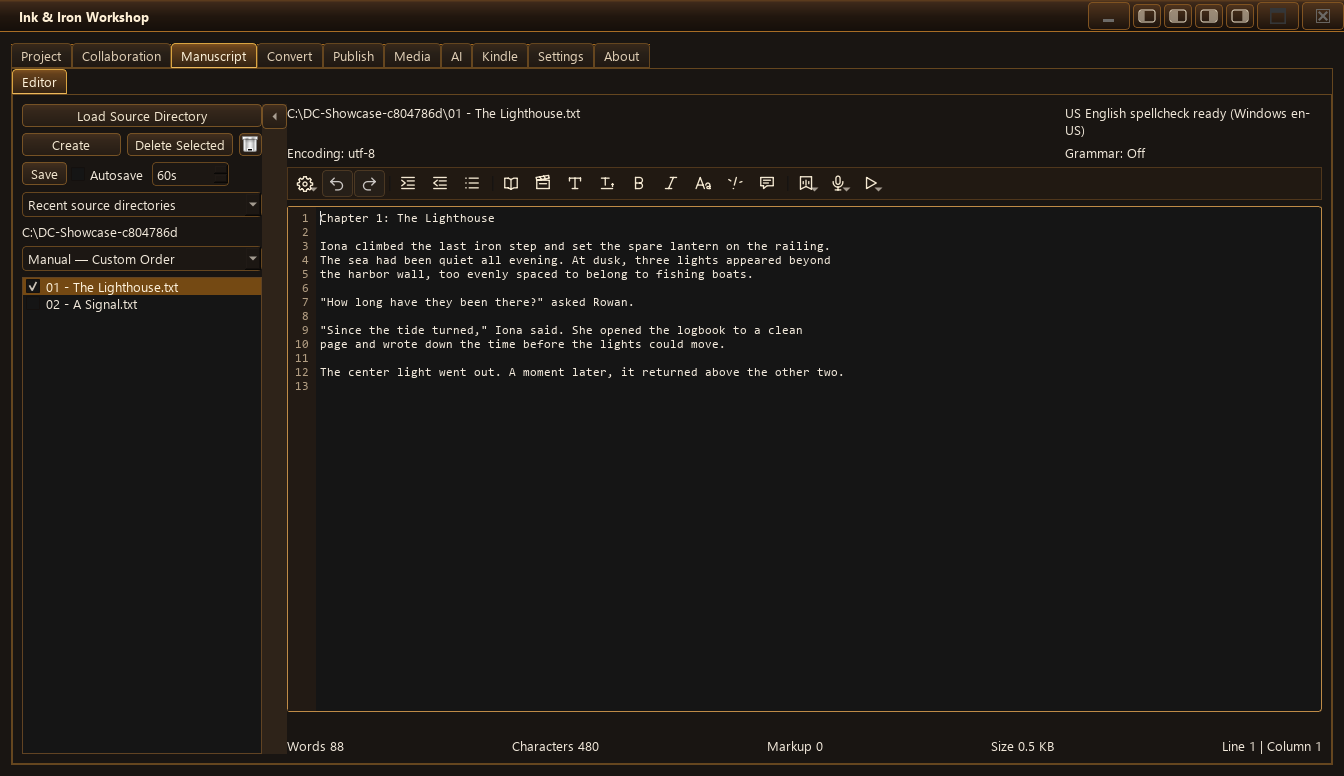
Organize manuscript files in filename or manual order, edit text with spelling and optional local grammar checking, and use Stitch to combine selected chapters. Git tools in the Collaboration workspace let authors review changes and work with project history when the project is in a Git working tree.
Publishing and audiobook production
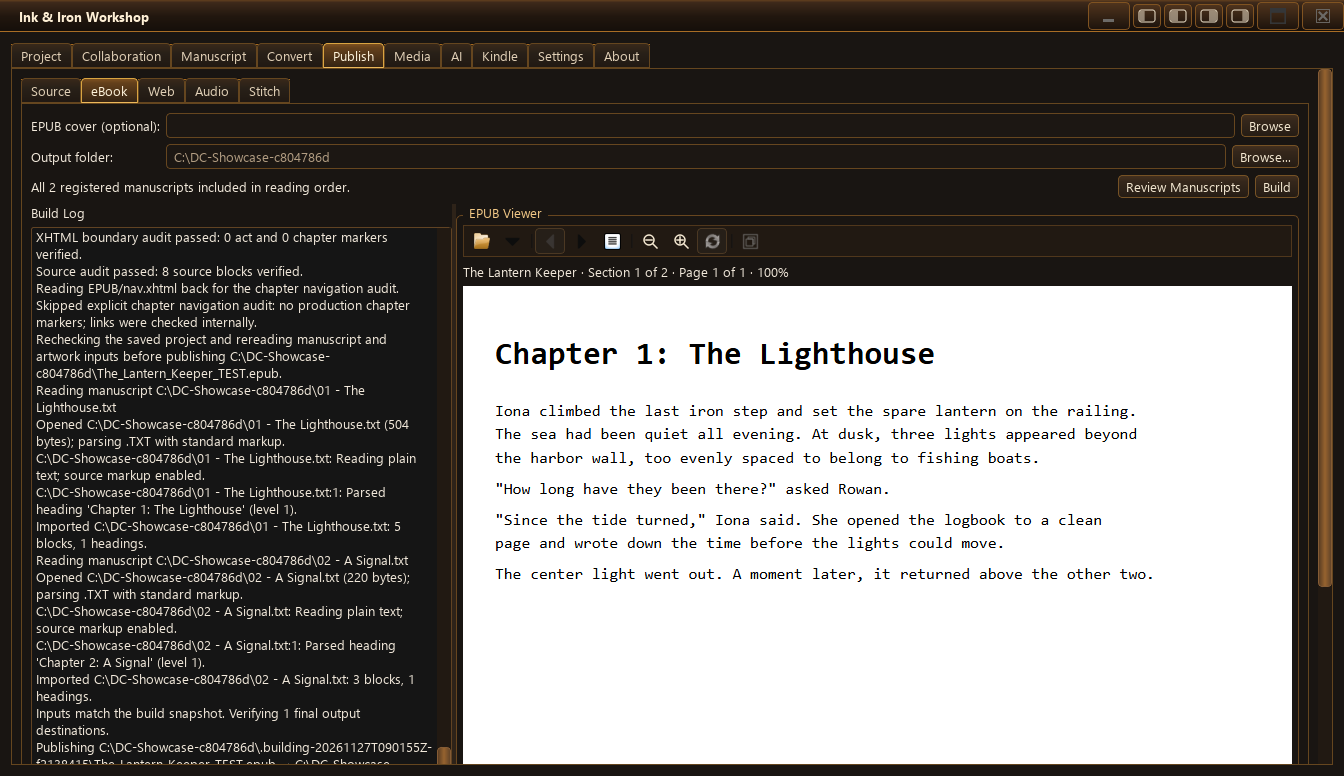
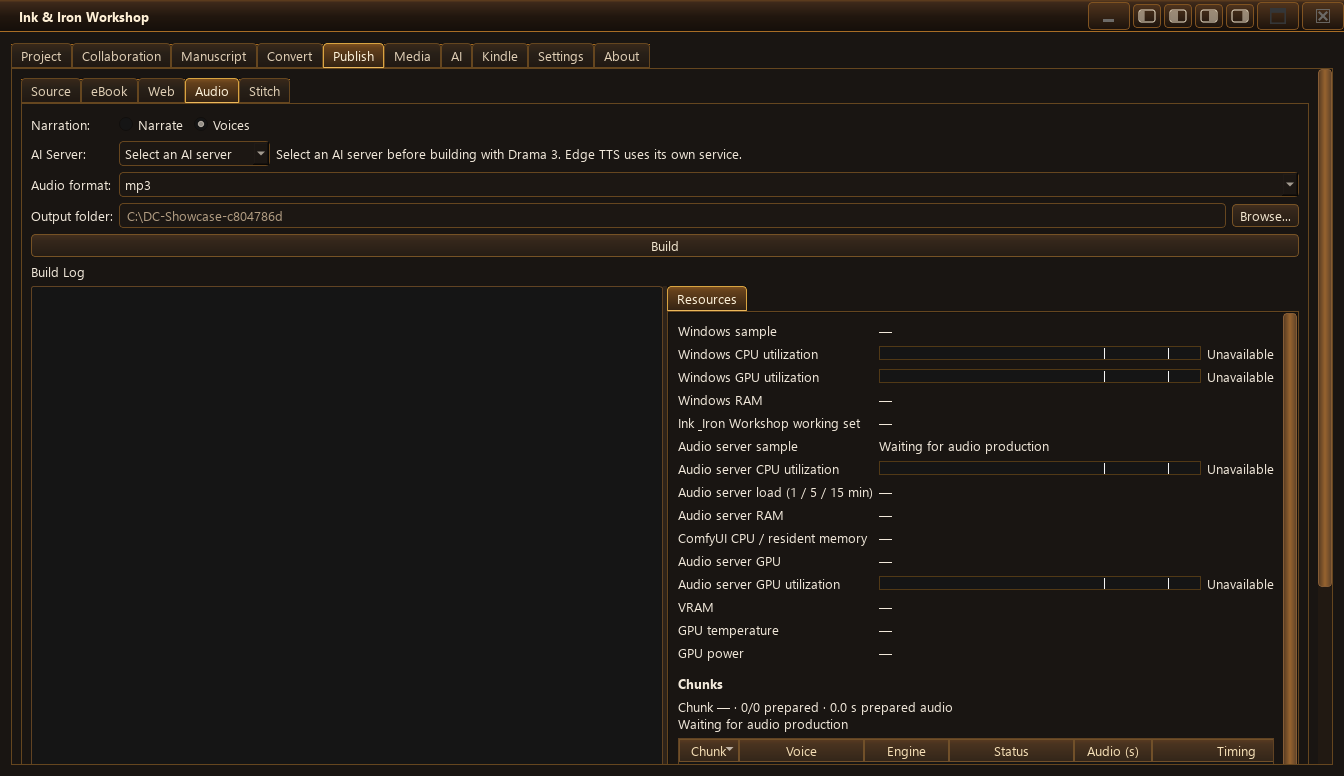
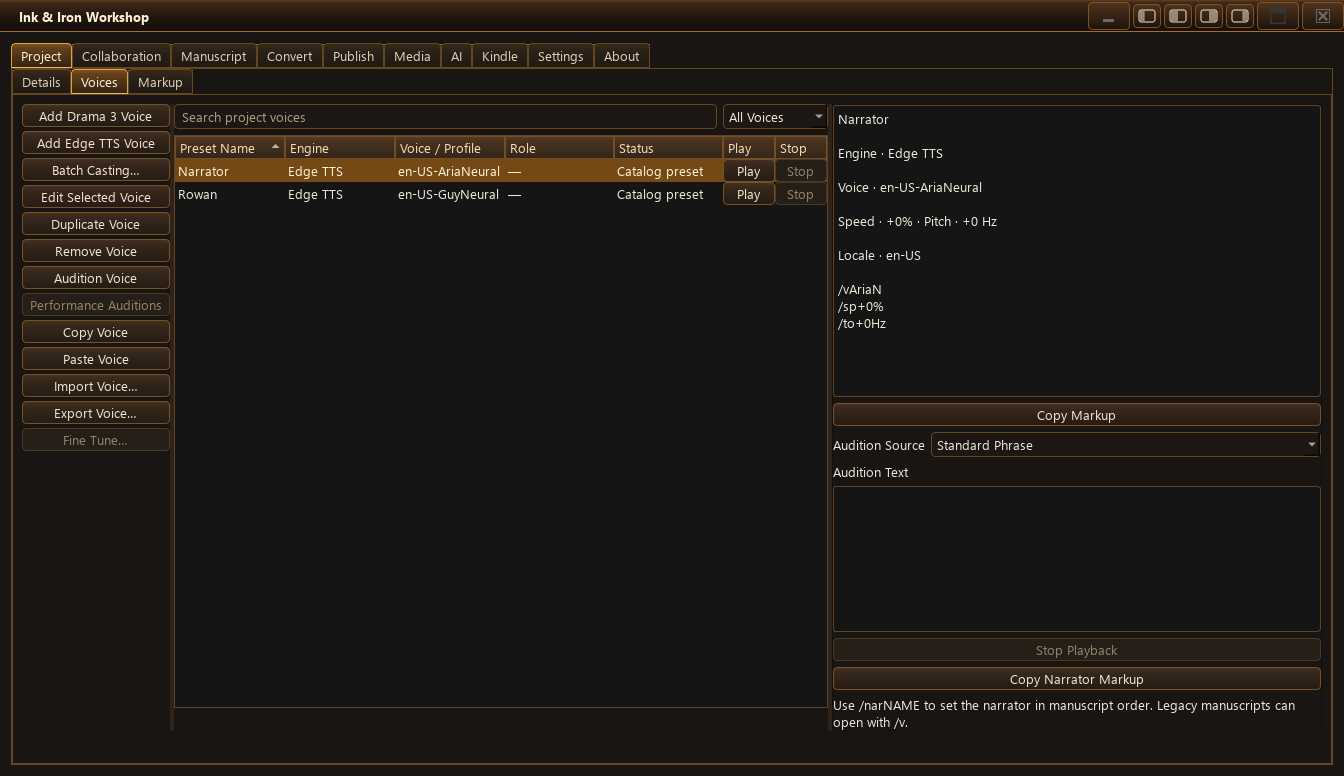
Build EPUB and Web Editions from the shared manuscript, or prepare audiobook output in Narrate and full-cast Voices modes. Reusable project voice presets and manuscript cues control voice, speed, pitch, pronunciation and pauses. The Editor can preview selected narration, and the Media workspace provides an audio mixer for combining speech and other audio.
Project knowledge and AI tools
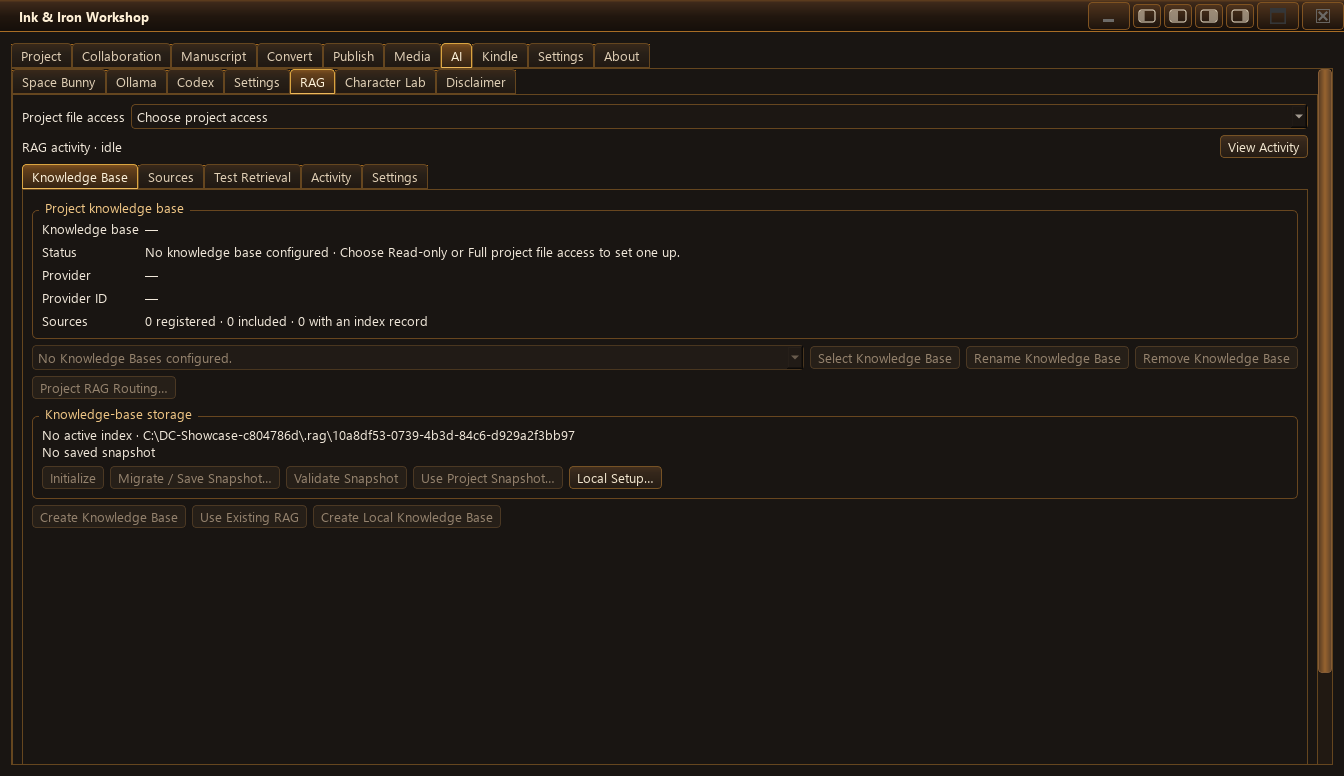
The AI workspace integrates Codex, Ollama and Space Bunny. Configured connections can use local or network-hosted models. Retrieval-Augmented Generation (RAG) lets the author maintain project-specific knowledge bases from selected manuscripts and background material, test retrieval and inspect source references.
Character Lab
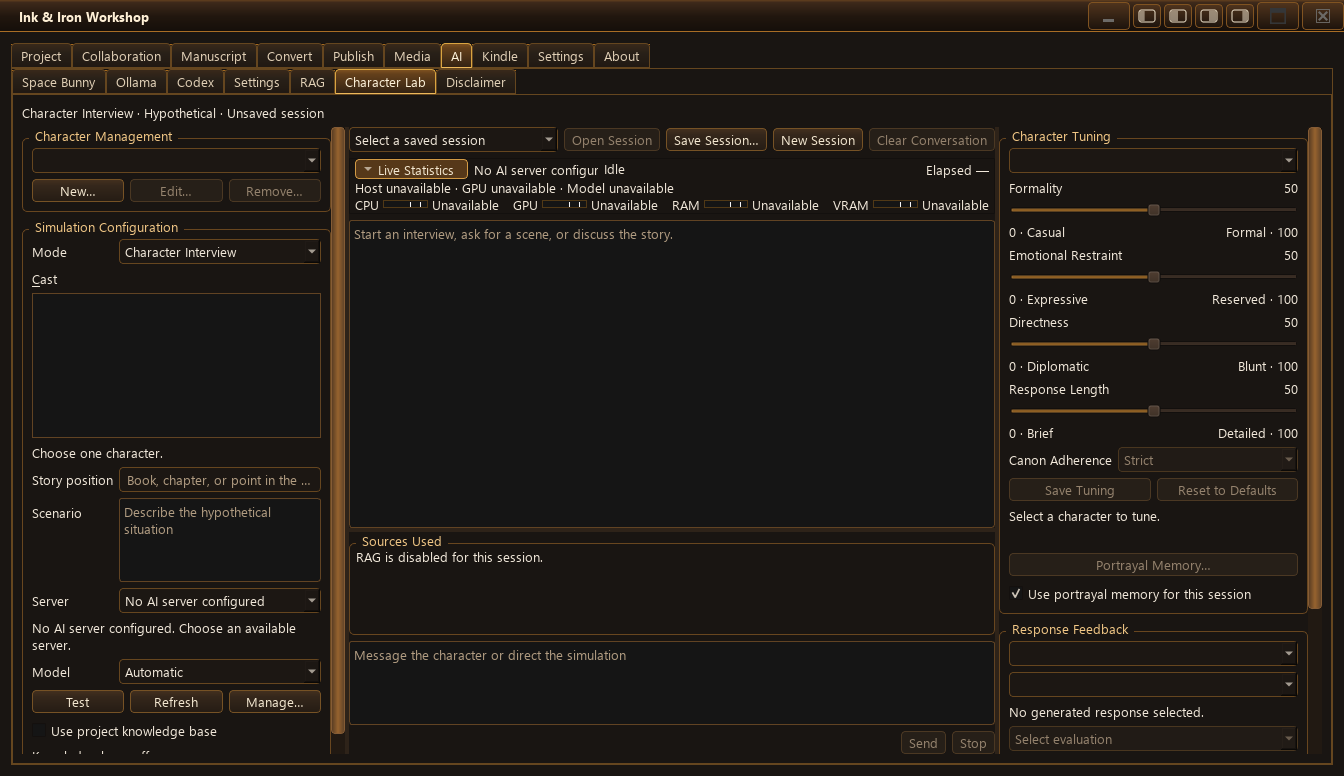
Create character profiles, explore an interview or a scene with a cast, and use selected project knowledge as canon guidance. Authors can tune portrayal with feedback and corrections, retry a response and compare the results. These sessions let authors explore dialogue and character behavior before deciding what belongs in the manuscript.
Development direction
The existing Git and issues workspaces provide a foundation for collaboration. The application identifies messaging, collaborative comments and review, and community integration as future work.